This guide explains how accounts receivable work, how to interpret “Receivables” definitions (including perspectives aligned with Investopedia), and how to manage invoice collections with disciplined policies. Accounts receivable refers to money customers owe from credit sales. It sits on the balance sheet as a current asset, and its quality affects cash flow, risk, and working-capital decisions.
Accounts receivable (often discussed in the same breath as “Receivables” and summarized in places like Receivables Investopedia-style reference frameworks) represents the money your customers owe you for goods or services delivered on credit. In practical terms, the faster you collect, the steadier your operating cash flow becomes—and the more carefully you assess credit risk, the more reliably you can forecast liquidity. From an industry-expert perspective, managing receivables is less about “chasing invoices” and more about building a predictable cycle: credit decisioning, invoicing accuracy, dispute control, collection cadence, and allowance modeling.
When receivables are managed with discipline, you do more than improve cash timing—you reduce earnings volatility, because credit losses and bad-debt expense often flow into financial results. You also reduce operational friction: fewer disputes, fewer “rework” cycles in billing, and fewer last-minute escalations between finance, sales, operations, and legal. Conversely, when receivables quality deteriorates, it rarely shows up as one dramatic event. It typically emerges as aging drift, rising dispute rates, increased allowance needs, or recurring customer “payment hesitations” that are symptoms of deeper issues in credit policy and invoicing processes.
In other words, accounts receivable quality is not just a balance sheet metric. It is a multi-system signal that reflects whether your commercial terms match your operational reality, whether your internal workflows are functioning end-to-end, and whether your risk governance is keeping pace with customer and market changes.
In standard accounting practice, accounts receivable are recorded when a company delivers goods or performs services under credit terms and earns revenue. They are typically classified as a current asset because many customers settle within a normal operating cycle (commonly within one year, depending on the business model).
From an objective standpoint, receivables are not “cash.” They are a claim to cash. The claim may be delayed due to slow payment, disputes, or customer solvency issues. That is why reporting frameworks emphasize valuation—very notably through an allowance for doubtful accounts (often called a credit loss allowance under modern accounting standards).
To interpret this correctly, it helps to separate three concepts that are often conflated:
Even if recognition is accurate, collection and valuation can still be wrong or uncertain. A company can “earn” revenue and record receivables correctly, yet still overstate net realizable value if its allowance model is weak, its credit underwriting is outdated, or its dispute process is inconsistent. Similarly, a company can have a sound allowance policy but still experience cash-flow strain if collection execution breaks down.
When readers search for Receivables Investopedia, they typically want a clear definition and basic interpretation: what receivables are, why they appear on the balance sheet, and how they relate to liquidity. Reference summaries can be useful for grounding terminology, but they rarely capture the operational mechanics that determine whether a receivable turns into cash.
An expert lens adds the missing layer: two companies can report similar receivable balances yet experience very different collection performance because of differences in customer concentration, billing quality, contract terms, and internal controls. One company might sell to large, stable counterparties with short terms and high billing accuracy; another might sell through complex projects, milestone billing, and high dispute probability. The balance sheet numbers can look comparable at a snapshot in time, but the “collection pathway” to cash is fundamentally different.
Additionally, reference summaries often under-emphasize the role of the allowance model and the difference between gross receivables and net receivables. In many real-world analyses, investors and credit analysts look beyond totals to evaluate whether receivables are likely to be collectible, whether the company’s allowance coverage seems appropriate, and whether aging patterns align with the stated credit risk profile.
So while a definition-first resource is a helpful starting point, the operational question is always the same: How does your receivables process convert invoices into cash while controlling losses?
Working capital is the day-to-day fuel of a business. Accounts receivable connect operating activity to cash timing. If your receivables grow faster than sales or remain outstanding longer than expected, you may be extending credit too aggressively, encountering billing friction, or underestimating credit risk.
Working capital discipline is not only about reducing receivables. It’s about matching the credit and billing design of your business model to the reality of customer procurement cycles, approval processes, and payment norms. A company that sells subscription services may naturally have a different receivables profile than a company that delivers large-scale capital projects with retainage and acceptance criteria. The operational levers differ, but the underlying discipline—ensuring receivables quality—is universal.
Consider these impacts in a more concrete way:
When you treat receivables management as a working-capital system, you build the ability to detect early warning signals: rising days sales outstanding (DSO), shifts to older aging buckets, repeated invoice rejection reasons, and increased dispute cycles. These are not “finance-only” issues; they reflect cross-functional execution.
Before diving into details, it helps to focus on the few factors that very strongly influence receivables performance:
(1) Credit policy quality (who you sell to and on what terms).
(2) Invoice and contract accuracy (what you bill, when you bill, and how disputes are handled).
(3) Collection cadence (how systematically follow-ups happen, and how escalation works).
(4) Credit loss estimation discipline (how you model expected losses).
(5) Customer concentration and industry norms (how business cycles affect payment behavior).
Those drivers can be translated into practical “control points” across the receivables lifecycle:
Strong receivables outcomes emerge when these controls function together rather than in isolation.
Accounts receivable are typically presented net of an allowance (or credit loss allowance) depending on the reporting framework. The gross receivable balance reflects invoices owed; the allowance reflects the portion expected not to be collected.
Professionals often reconcile changes in receivables by reviewing:
To deepen the interpretation, analysts often compare receivable movements to operational drivers:
Another important nuance is that the balance sheet snapshot doesn’t reveal timing. A company might show a stable receivable balance at quarter-end while experiencing chronic slow payments earlier in the period. Therefore, investors and internal stakeholders often track receivables metrics (aging, DSO, dispute rates) across time—not only on one date.
In many everyday conversations, “receivables” can mean any type of money owed to a business. But in formal accounting and financial analysis, the term accounts receivable usually refers specifically to amounts due from customers for sale of goods or services. Other “receivables” might include loans to employees, tax receivables, or other receivable categories.
For readers researching Receivables Investopedia concepts, the key takeaway is to confirm the exact meaning in the source context—whether it refers specifically to customer invoices or a broader receivables category.
This matters because different receivable types have different risk profiles and collection mechanisms. For example:
Mixing these concepts in analysis can lead to incorrect conclusions about credit risk. A tax receivable that increases due to refund timing should not be treated as a signal of customer credit deterioration.
Receivables performance is inseparable from commercial terms—especially pricing and supplier/customer arrangements. Consider how invoicing is structured: does your pricing include installation or service components? Do you have milestone-based billing? If payment terms extend to 60 or 90 days, your cash cycle and receivables aging will naturally reflect that.
On the supplier side, the mirror image is accounts payable. While this article focuses on receivables, businesses often manage both together because working capital is a system: how quickly you collect from customers versus how quickly you pay suppliers.
Professional top practice: align billing schedules with delivery confirmations and contract milestones. Misalignment is a common reason for disputes—and disputes are a major driver of receivables aging.
To see how pricing decisions can ripple into receivables, imagine a few realistic scenarios:
Integrating commercial design with receivables execution is essential. Credit management can’t compensate for systemic billing errors. Even strong collection teams struggle when invoices are frequently disputed due to avoidable contract or documentation issues.
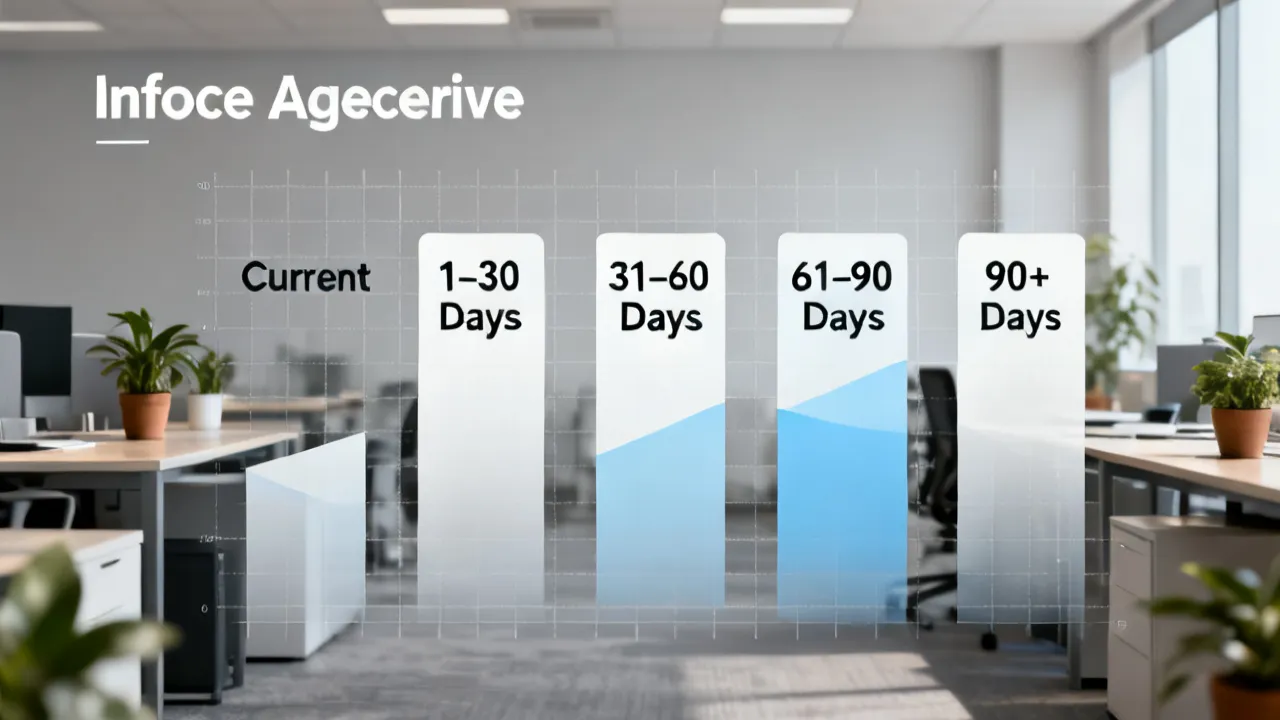
Receivables aging breaks down outstanding invoices by how long they have been unpaid. Common buckets include current, 1–30 days, 31–60 days, 61–90 days, and 90+ days (the exact structure varies by company).
An increase in older buckets can indicate:
Conversely, improving aging usually reflects better collection execution and clearer invoice documentation.
To make aging truly useful, teams should treat it as a diagnostic tool rather than a performance headline. That means breaking down aging movement by root cause categories:
When aging increases, strong organizations can answer quickly: Is the aging problem primarily commercial, operational, or credit-related? That differentiation determines whether the solution is an invoice remediation program, a dispute resolution workflow, a credit policy tightening, or customer-specific risk mitigation.
Receivables are valued based on collectability, which requires judgment. Under modern standards, companies generally estimate expected credit losses rather than relying solely on past write-off history. This makes receivables reporting more robust, but it also increases the need for disciplined documentation.
Practically, finance teams consider factors such as:
If you manage receivables across multiple product lines or customer categories, segmenting receivables can improve both accuracy and transparency.
To expand on what “discipline” means in allowance modeling, consider the following practical elements that separate a credible model from a fragile one:
From an expert standpoint, allowance modeling is not purely a technical accounting exercise—it influences business decisions. If allowances are too low, earnings may look stronger but cash risk can increase unexpectedly. If allowances are too high, it can create a conservative earnings pattern and potential tension with commercial teams who want to extend credit. A well-governed approach aligns the accounting estimate with actual credit performance and operational realities.
A common misconception is that collections should be aggressive to be effective. In reality, successful receivables management is often a balance of firmness and clarity. The top collection policies include:
This is how companies reduce the gap between “what is owed” and “what is actually collectible.”
Relationship management is especially important in B2B environments where customers have purchasing and payment systems, approval workflows, and internal controls. Collections teams that understand these constraints can improve outcomes without damaging trust. For example, they might:
It’s also valuable to treat collection outcomes as feedback. If the same customer repeatedly disputes the same invoice type, the solution is not repeated follow-ups—it’s billing standardization and contract alignment. In high-performing organizations, collections data is used to improve the entire order-to-cash process.
Even when analysts and operational leaders track receivables diligently, misinterpretations can happen:
Additional pitfalls that often appear in practice include:
To avoid these pitfalls, companies should integrate finance reporting with operational diagnostics. The best insights come when aging migration and disputes are mapped to contract and delivery milestones.
| Policy or Condition | Typical Impact on Receivables | What to Monitor |
|---|---|---|
| More stringent credit approvals | Often reduces high-risk receivables; may slow growth | Bad-debt write-offs, aging migration to 90+ buckets |
| Clear invoicing standards and required attachments | Fewer disputes; faster conversion to collected cash | Invoice rejection rate, dispute cycle time |
| Shorter payment terms | Lower outstanding balance; improved liquidity | Days sales outstanding (DSO), cash conversion cycle |
| Proactive collections cadence | Prevents aging creep; increases early-stage recoveries | Contact-to-payment conversion by aging bucket |
| Allowance/credit loss estimation aligned to risk | More credible reporting; improved transparency | Allowance coverage ratio, sensitivity to customer segments |
| High customer concentration | Higher volatility if one payer delays or defaults | Top-customer aging and exposure limits |
To add more nuance to this table, it’s useful to recognize that each policy can be implemented in multiple ways. For instance, “clear invoicing standards” might mean different things: mandatory PO fields, proof of delivery attachments, standardized tax documentation, or consistent remittance instructions. The impact on disputes depends on how comprehensively and consistently those standards are enforced across teams and systems.
Below is a practical, structured approach that finance and operations teams can adopt. Conditions/requirements are embedded as part of the process.
To make this guide even more actionable, each step can be enhanced with “what good looks like” artifacts and operational checkpoints.
Finally, a disciplined receivables program includes feedback loops: collections insights inform credit policy, and disputes insights inform invoicing and order fulfillment processes. Without those loops, receivables may improve temporarily but deteriorate again as underlying issues reappear in new invoices or new customers.
For readers who want a standards-based understanding of credit loss estimation and receivable valuation, authoritative guidance is typically found in accounting standard-setter materials and professional accounting organizations. For example, the U.S. Financial Accounting Standards Board (FASB) provides guidance on expected credit losses under relevant standards (ASC 326). Similarly, the International Accounting Standards Board (IASB) addresses expected credit loss approaches under IFRS 9.
Reliable sources to consult for the underlying accounting framework include:
In addition to standard-setter guidance, companies often benefit from studying how peers describe their receivables policies in:
These disclosures do not always provide an operational “how-to,” but they do provide context for what analysts look for: governance of credit risk, stability of allowance assumptions, and relationship between aging trends and credit provisions.
Accounts receivable are amounts owed to a business by customers for goods or services delivered on credit. They typically appear on the balance sheet as a current asset and must be assessed for collectability through an allowance/credit loss approach.
Reference sites like Investopedia typically provide a general definition, explaining that receivables represent claims to cash and are recorded when revenue is recognized under credit sales. They also often highlight why allowances for doubtful accounts matter. However, operational details—like dispute rates and collection cadence—are usually not covered in depth.
Receivables can rise due to slower collections (aging migration), invoicing timing changes, more credit being extended, higher dispute volumes, or customer payment term modifications. A careful reconciliation between sales, invoicing dates, and payment receipts is the very reliable approach.
Practically, “stable sales” can still produce higher receivables if your revenue timing shifts relative to invoicing. For example, if revenue is recognized upon acceptance but invoicing occurs later, the receivable balance can grow. Alternatively, if sales volumes are stable but average contract terms stretch—perhaps through a negotiation or promotional offer—receivables will naturally increase due to longer settlement cycles.
No. Accounts receivable are not cash. They represent expected future cash receipts, subject to customer payment behavior and credit risk. That is why allowance/credit loss estimation is central to receivables reporting.
This distinction becomes crucial when planning liquidity. A company can report strong profitability while still struggling to pay vendors if receivables are stuck in disputes or slow-paying segments. Therefore, cash forecasting should use expected collection timing (based on aging and historical payment patterns), not only the balance sheet total.
Receivables aging categorizes unpaid invoices by how long they have been outstanding. It helps identify collection issues, signal credit deterioration, quantify risk in specific age bands, and improve prioritization in collections.
It also enables more targeted actions. For instance, early-stage aging may require reminders and invoice correction. Mid-stage aging may require escalation to account managers and formal communication. Late-stage aging may require credit holds, payment plans, or legal review. Aging provides the structure for these decision points.
Companies typically use an approach consistent with their applicable accounting standard (e.g., expected credit loss frameworks under ASC 326 or IFRS 9). This often includes segmenting receivables, applying historical loss rates adjusted for current and reasonable forward-looking information, and documenting assumptions.
In practice, many companies triangulate loss estimates using multiple lenses: customer-specific credit indicators, aging-based loss rates, and management overlays informed by observable developments (like new customer distress signals). The key is that overlays should be explainable, governed, and consistently applied.
Yes. Better invoicing accuracy reduces disputes and accelerates payments, which can lower aging and improve expected collectability. While credit risk still exists, process improvements often reduce avoidable delays.
Improved invoicing is one of the highest-leverage receivables initiatives because it tackles the “friction” that prevents invoices from being paid. A clean invoice is easier for customer accounts payable teams to process, easier to reconcile internally, and less likely to be held for missing documentation.
Common metrics include days sales outstanding (DSO), receivables aging distribution, allowance coverage ratios, dispute cycle time, and cash conversion cycle indicators. The top choice depends on whether you need operational insight (aging and disputes) or investor-level performance tracking (DSO and cash conversion).
Many teams also monitor “actionability metrics,” such as the percentage of invoices with complete required fields, the invoice rejection rate, and the time from invoice issuance to first customer contact. These metrics predict downstream aging outcomes and help teams intervene earlier.
Accounts receivable are more than a line item—they are a bridge between operational execution and financial liquidity. When people search for Receivables Investopedia-type definitions, they are often trying to understand the “what.” This guide emphasizes the “so what”: the true business value of receivables management comes from disciplined credit policy, accurate invoicing, effective dispute handling, and transparent credit loss estimation.
If you treat receivables as a measurable operating system—rather than a static balance—you gain earlier warning signals, stronger cash forecasting, and more credible financial reporting.
In practice, the most effective receivables organizations build a culture where every functional team understands how their actions influence cash collection. Sales learns which customer commitments increase dispute risk. Operations learns how delivery documentation quality affects invoice acceptance. Finance learns how allowance modeling connects to observed collection performance. Collections learns how to escalate with evidence and how to close the loop on recurring root causes.
That integrated approach turns accounts receivable into a competitive advantage: customers experience fewer billing errors and smoother invoice processing, the business experiences more predictable cash cycles, and financial reporting becomes more resilient during periods of uncertainty.
Striking the Perfect Balance: Navigating Premiums and Out-of-Pocket Expenses in Senior Insurance Plans

Explore the Tranquil Bliss of Idyllic Rural Retreats

How to Make Lasting Memories at Disneyland Attractions

4rkojvsx Technology: Industry Insights and Buying Guide

Affordable Phones and Plans for Seniors

Affordable Full Mouth Dental Implants Near You

Unlock the Top Kept Secrets to Finding Your Ideal Dentist for Flawless Dental Implant Results!

Discovering Springdale Estates

Unveiling RS Sul Telecom Services


Digio Livelo Explained: Rewards Integration and Use
This guide explains how Digio Livelo works for earning and using rewards, what to verify before you start, and how to choose sensible redemption options. “Digio Livelo” refers to a rewards relationship between Digio’s digital banking/payment experience and Livelo’s loyalty ecosystem. Practically, it’s about matching your spending or engagement to reward accrual, then selecting redemptions that fit your goals.

Receivables Explained with Investopedia Insights and Risk Controls
This guide explains receivables fundamentals and how to manage them with evidence-based controls aligned with Investopedia-style definitions. It provides objective background on what “receivables” means in accounting, why aging matters, and how businesses assess credit exposure, collect payments, and protect cash flow without assumptions.

Accounts Receivable Guide: Investopedia Insights for Clarity
This guide explains how accounts receivable work, how they’re valued and managed, and how firms interpret them in decision-making. Background context covers the Receivables concept referenced by Investopedia, common risks like credit exposure and timing gaps, and the role of policies, documentation, and estimates such as allowances. The focus is practical and objective for analysts and operations leaders.

Receivables: How to Interpret and Manage Credit Risk
Receivables are the lifeblood of many businesses because they represent money owed by customers. This guide explains how receivables are analyzed, why payment terms matter, and how “Receivables Investopedia” concepts help standardize thinking about liquidity and credit risk. Objective background follows, centered on accounting definitions, risk signals, and common management practices.

Bambora Payfac: A Practical Guide for Merchants
Bambora Payfac helps merchants structure card and digital payments through a streamlined payment facilitation model. This objective guide explains what payment facilitation is, how onboarding and compliance typically work, and what merchants should evaluate—pricing transparency, risk controls, settlement timing, and operational responsibilities—so you can choose an approach that fits your business needs.
Understanding Accounts Receivable and Investopedia Insights
This guide explains how accounts receivable work, how to interpret “Receivables” definitions (including perspectives aligned with Investopedia), and how to manage invoice collections with disciplined policies. Accounts receivable refers to money customers owe from credit sales. It sits on the balance sheet as a current asset, and its quality affects cash flow, risk, and working-capital decisions.
